
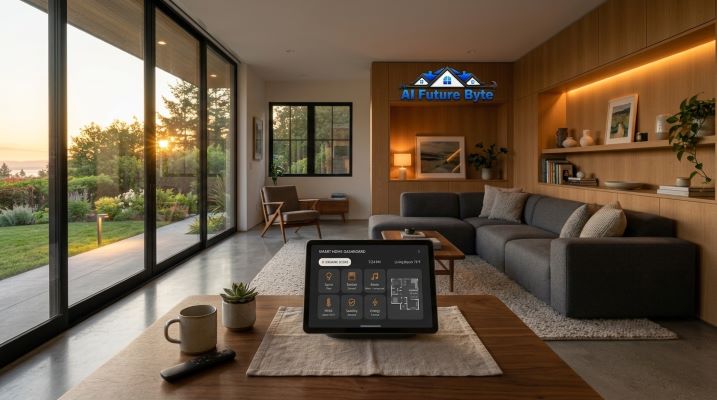
How AI Is Changing the Future of Home Automation
Suppose that you come home at the end of a long day at work. No need to turn a light switch, to unlock the front door or to manually set the thermostat. Your home just knows you, unlocks, adjusts the indoor temperature to what you desire, and dims the lights, all so you can relax. No longer a scene from a science fiction film. It’s the current reality that’s fueled by AI home automation.
Smart homes have been using simple scheduling and manual smartphone applications for years. All timers and routines were programmed by the user. The AI-driven transformation is making such reactive environments become predictive today. Rather than waiting for instructions, today’s systems learn your habits, predict your family’s requirements and maximize the environment in real-time.
If you’re interested in simple modernizing upgrades or a complete decorating concept for lounge rooms, it’s important to be familiar with the technology. So, let’s delve into how AI is transforming the future of living rooms, its pricing, and its integration into contemporary interior design.So, let’s discover how AI is shaping the future of living rooms, the cost, and its incorporation into the modern interior design.
From Manual Remote Control to Predictive Intelligence
Smart devices of the traditional kind needed constant human intervention. To get the coffee maker to brew at 7:00 AM, you would need to set it by hand. If the schedule shifted on Friday, the device would maintain its fixed schedule.
Machine learning and pattern recognition overcome this inflexibility with AI. Today’s systems are able to analyze data from motion sensors, ambient light detectors, the weather and device usage. The software eventually learns when you get up, leave for work and how cold you like your bed when you go to sleep.
AI home automation is truly convenient by transforming manual controls into predictive actions. Your life adapts to your environment and not the other way around, so you don’t have to give your attention to complex apps.
Traditional Smart Home vs. AI Smart Home
| Feature | Traditional Smart Home | AI-Powered Smart Home |
| Operation Mode | Manual / Rigid Schedules | Adaptive / Predictive |
| User Effort | High (App setup) | Low (Learns habits) |
| Energy Efficiency | Static timers | Real-time optimization |
| Security | Basic motion alerts | AI threat detection |
AI is revolutionizing modern homes in several impact areas
Artificial intelligence is not a simple device, but intelligent network which is connected with each and every system in your home. These are the key sectors with fast innovation.
Adaptive Energy and Climate Control.
A huge part of home energy costs is from heating and cooling. Smart learning thermostats automatically regulate the indoor environment to optimize energy efficiency while maintaining a comfortable temperature.
These systems track the local weather, wall heat retention and household activity. The system detects a regular routine of when everyone is gone by 8:30 AM on weekdays, so it automatically adjusts the heating. It then sets the ideal temperature just before you go back.
Intelligent Lighting and Ambiance
Modern light systems provide much more than switching on and off on a timer. AI based bulbs will follow natural daylight and adjust colour temperatures during the day. You’ll enjoy bright and cool light in the morning and soft and warm light in the evening, helping to set your internal clock.
Intelligent lighting is a huge structural part that is incorporated when designing lounge room layout ideas for decorating. Customize ambient scenes to show off architectural elements, enhance artwork, or create ambiance for movie nights; without ever touching a wall switch!
Proactive Home Security
Older security cameras were constantly nagging, constantly alarming people when a branch moved, or when a squirrel ran across the lawn. The advanced computer vision technology of the modern ai home automation control platforms is used to remove false alarms.
Security systems will now be able to tell the difference between family members, delivery drivers, pets and unknown intruders. The system alerts you immediately if an unfamiliar person is standing near your back door, activates outdoor floodlights and automatically locks electronic locks.
Blending High Tech with Modern Home Decor
One of the most prevalent concerns of homeowners is that installing advanced technology will destroy their home interior. Bigger gadgets, plastic sensors and visible wires can easily throw a spanner in the works of well-thought-after home&decor. Fortunately, the tech industry has gone the way of hidden, embedded hardware.
Nowadays, smart home technology focuses on being so much more subtle that it does not overshadow your design decisions, but rather strengthens your Home Improvement goal.
| Design Strategy | Tech Integration Technique | Interior Decor Benefit |
| Concealed Hardware | Hidden sensors & low-profile wall plugs | Eliminates clutter and maintains clean lines |
| Natural Materials | Wood-paneled & fabric-wrapped smart speakers | Seamlessly blends technology into furniture |
| Smart Ambiance | Adaptive backlight LED strips & smart scenes | Highlights artwork and architectural features |
Aesthetic Tips for Integrating Technology:
- Choose Dual-Purpose Hardware
- Conceal the Essentials
- Enhance Room Aesthetics with Light
By selecting stylish, low-profile devices, you can maintain a warm, inviting living space while enjoying complete digital control.
Practical AI Solutions for Everyday Life
Implementing intelligent automation does not require rebuilding your residence from scratch. You can start small and expand your system over time. Many versatile ai home automation solutions integrate directly into existing structures, offering immediate convenience and energy savings.
Smart Water Leak Prevention
Intelligent sensors monitor plumbing pipes for unusual pressure drops, automatically shutting off the main water valve if a pipe bursts while you are on vacation.
Automated Window Coverings
Smart shades track solar patterns, closing automatically during hot summer afternoons to keep rooms cool, then opening in winter to capture natural warmth.
Automated Floor Care
Modern robotic vacuums create precise 3D maps of your layout, identify obstacles like loose cables, and clean high-traffic areas automatically when you leave the house.
Understanding Costs and Software Investment
When planning a smart system upgrade, understanding ai home automation software pricing is crucial for establishing an accurate project budget. Costs vary depending on whether you choose a DIY setup or an enterprise-grade professional system.
Entry-Level DIY Systems ($0 – $10 per month)
Platforms like Google Home, Amazon Alexa, and Apple HomeKit offer built-in automation routines for free. You only pay for the individual hardware items, such as smart plugs, light bulbs, and hub devices. Optional cloud storage subscriptions for security video feeds typically range from $3 to $10 per month.
Mid-Range Hub Platforms ($5 – $20 per month)
For deeper customization, platforms like Home Assistant or specialized cloud hubs offer expanded automation capabilities. These services provide advanced local processing, complex conditional rules, and encrypted remote access for a modest monthly fee.
Professional Enterprise Solutions ($1,000 – $10,000+ upfront)
High-end custom systems (such as Control4, Savant, or Crestron) require professional installation and network architecture. These installations usually carry higher hardware costs alongside ongoing maintenance software agreements to ensure seamless operation across large estates.
Overcoming Privacy and Connectivity Challenges
While the benefits of intelligent automation are undeniable, homeowners must address two primary challenges: data privacy and network reliability.
Protecting Data Privacy
Because artificial intelligence relies on personal habit data, choosing secure devices is vital. Look for hardware manufacturers that support local data processing rather than sending every voice recording or video frame to public cloud servers. Keep your primary Wi-Fi network secure by placing smart hardware on an isolated guest network.
Ensuring Network Stability
Dozens of connected devices can easily strain a standard router. Upgrading to a Wi-Fi 6 or mesh network ensures every sensor maintains a stable connection. Additionally, selecting devices that support unified connectivity standards—such as Matter and Thread—allows hardware from different brands to communicate locally without relying constantly on active internet connections.
The Road Ahead for Intelligent Homes
The future of living spaces lies in complete context awareness. Upcoming developments will move beyond basic routines to health monitoring, voice assistants capable of natural conversation, and automated micro-grids that store solar energy efficiently.
Integrating AI home automation is no longer just about owning fancy gadgets—it is about creating a living space that works actively to improve your comfort, security, and quality of life. Whether you are executing a comprehensive Home Improvement plan or updating your overall home&decor, intelligent technology provides the foundation for an effortless, efficient lifestyle.
