Smart Roof Repairing: How AI Drones and Thermal Imaging Detect Hidden Leaks Fast
The roofing industry is making a huge change. Home maintenance has been reactive for years people only find out that something is wrong when they start to see dark water spots on the ceiling or when it rains a lot and it starts pouring all over the house. It’s then that there’s major damage to the insulation, wooden rafters, and drywall.
Fortunately, technology has taken structural maintenance to a new level of excellence, making it possible to predict structural failure and resolve issues with AI and advanced diagnostics. Today, state-of-the-art systems, like AI drones and thermal imaging, are employed to detect leaks early and prevent them from causing all kinds of trouble on the roof.
While inspecting roofs, there is one thing that is not visible on the surface that can pose a danger, and that is the threat from mould.
The Normal Roof Inspection Process
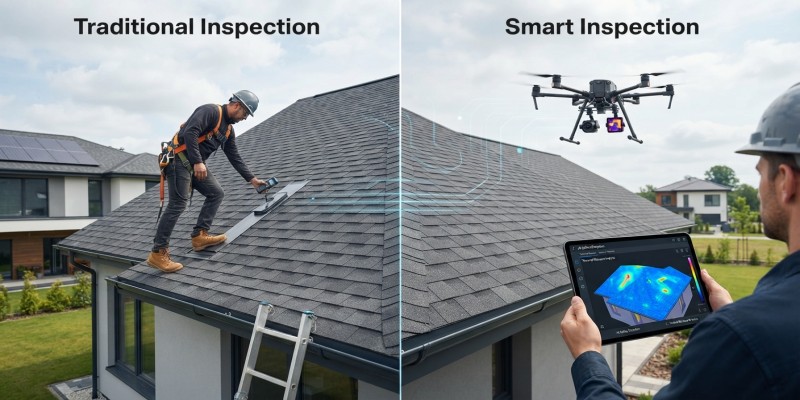
The normal roof inspection process involves a contractor having to reach the roof, walk across the roof shingles and visually check the roof surface for cracked shingles, torn granules and rusted flashing. Even though this technique has been around for centuries, it has some problems:
- The eyes of men cannot see through the roofing membrane surface layer (shingles). When it comes to moisture, rot in the plywood and drips that are not easily seen in the roof deck, they are not noticed until the problem manifests itself as rot.
- It can be a very dangerous situation for both homeowners and contractors to walk on a steep roof that is damaged, wet or muddy.
- Human Error: An inspector may not be able to locate any micro-crack or failing seals around vents or chimneys because of fatigue, poor lighting or obscured angles.
Progressive roofing trends incorporate state-of-the-art roof monitoring technology that can map, scan and predict roof vulnerabilities with pinpoint accuracy to overcome these challenges.
Modern Roof Examinations Using AI Drones
Unmanned Aerial Vehicles (UAVs) or drones, have completely revolutionised how residential and commercial roofs are evaluated. Drones are equipped with 4K cameras and GPS-stabilized cameras, and can quickly walk the entire roof structure in minutes.
High-resolution mapping and photogrammetry activities.
Drones take hundreds of overlapping high-resolution photos of the roof from various angles with AI. These images are then fed into artificial intelligence stitching software that results in an artificial 3D image of the roof.
Recognise the eye defects associated with computers.
Images are captured and visual data analysed in real-time using computer vision algorithms. The AI is trained using millions of data points relating to roofs and can recognise:
- Cracks in the shingles or tiles.
- Rust or rotted metal seams and flashing.
- Damaged or sagging gutters.
- Lifted and wind-lifted shingles that will be susceptible to the next storm.
- Automated and no guesswork – no need to check any square inch of the roof.
How Thermal Imaging Catches Trapped Moisture
Thermal imaging (infrared thermography) is able to peer beneath the surface of a building and see what the unaided human eye cannot, while visual drone imagery shows surface damage.
The Science of Thermal Leak Detection
The thermal capacity of water is greater than dry building materials. This means that moisture will retain and trap heat differently from dry insulation or dry wood. During the day, the water trapped in the pockets will cool at different rates than the rest of the dry roof materials, due to the warming of the roof by the sun.
A method for locating leaks (even when destructive testing is excluded)
An inspector can use the thermal camera on the drone or handheld to make a thermogram (heat map) of the roof.
- Water Damaged Areas: Water-damaged areas can be detected as separate cool zones during hot weather because moisture evaporates from the area, thus taking heat with it.
- Moisture can retain heat longer than dry insulation when it is trapped in the warmer zones in colder environments.
Even if the leak is several feet away from the roof where the water is dripping on the roof into the home, these thermal signatures can help the contractor locate the source of the leak without tearing open unneeded areas of the roof.
With a forward-thinking attitude, these companies were able to save thousands on roofing repairs.
AI-Powered Predictive Maintenance in Roofing
AI is not only used to detect leaks but can also be used for predictive maintenance in roofing.
AI models can predict the failure of a roof component by taking into account historical weather data, drone scans, and parameters related to material age. For example, an AI algorithm may detect that a ridge cap on the south side of a house is starting to deteriorate, and during the summer, when they can expect a heat wave to occur, they can remind the homeowner to strengthen the structure to prevent leaks from causing mould and structural damage in the house.
Smart repairs, the prevention of roof leaks, can be part of the overall roof replacement and can provide years of protection to your home’s front line of defence.
Conclusion
The roofing industry is no longer simply about hammers, nails, and shingles – it’s a data-driven and automated industry. Smart roofing systems involve technologies like AI-powered drones and thermal imaging cameras, allowing homeowners to detect hidden leaks early and avoid them escalating into major issues.The use of advanced tools such as AI-powered drones and thermal cameras allows a homeowner to locate leaks early and prevent them from turning into a roadmap to disaster, avoiding the thousands of dollars in repairs needed in an emergency.
Technology is still progressing and making your home safer, drier and more accurate than ever.
